You are invited to join us for the 12th and final
One River Ethics Matter (OREM-12) conference!
______________________________
Virtual Only (link provided with registration)
When: Nov. 12-13 (8:30am – 12:00pm Pacific Time)
Cost: Free and open to the international community
To Register: More info coming, Summer 2026
______________________________
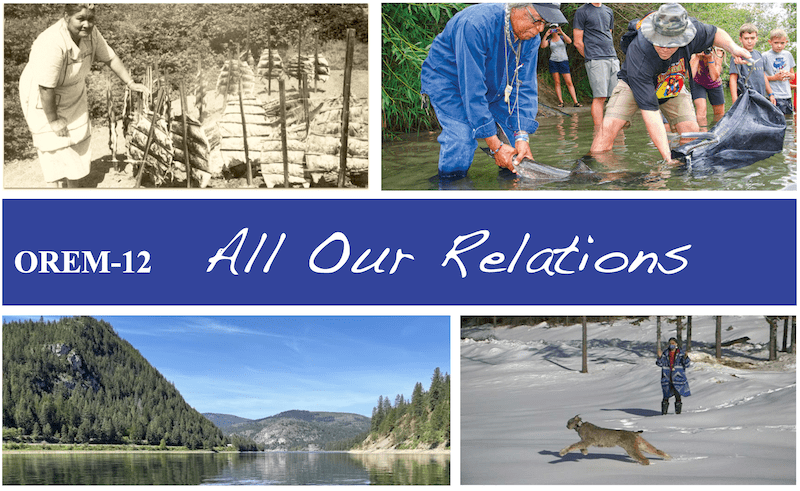
“All Our Relations” is an Indigenous concept of profound interconnectedness. It recognizes that humans are not separate from nature, but part of a sacred web of life that includes all people, animals, plants, the earth, and the elements.
______________________________
Theme and Agenda:
As we face increasing climate change impacts on natural resources and local communities and adjust to changes in National policies, now is the time to meet and determine:
- How do we do real work in challenging times?
- What is demanded of us, working together, in a new policy landscape?
- What is our path forward to protect and restore the earth that makes all life possible?
We will tackle these questions through a series of four panels:
- Rivers of Our Moment
- Rivers through Our Memory
- Rivers through Our Vision
- Rivers as Our Responsibility
About OREM
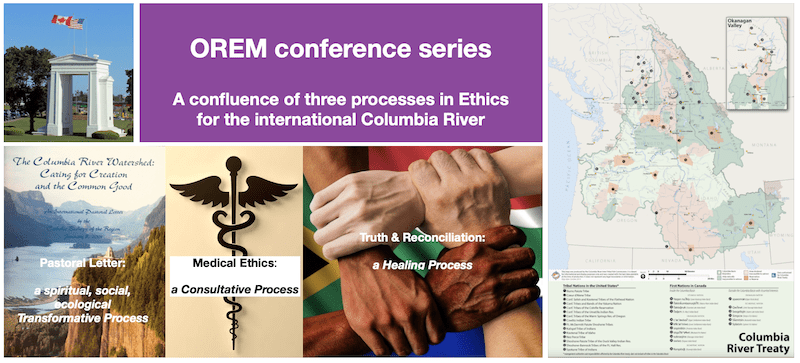
Beginning in 2014, the One River, Ethics Matter (OREM) conference series has facilitated an international “ethics consultation” for the critically ill Columbia River. OREM addresses the multi-generational trauma and impacts of the dam-building era on human and nonhuman life with a focus on Indigenous Tribes and First Nations, such as individual and communal trauma, flooded sacred lands, and the loss of, and threat to the Tribes’ First Foods. Conferences bring together Indigenous and faith leaders, scholars, policy-makers, scientists, and environmental ethicists to discuss opportunities to improve ethical decision making.
OREM is a confluence of three processes in ethics:
- a transformative process embodied in the Columbia River Pastoral Letter
- a consultation process used in medical ethics
- a truth and reconciliation process: healing dialogue modeled from South Africa’s response to apartheid.
Each OREM has sought to have both Indigenous and academic hosts, alternating between Canada and the United States. A primary focus is on Indigenous people who have lived with the river from time immemorial and for whom the river’s life, including salmon, are front and center. See: OREM Conference Series